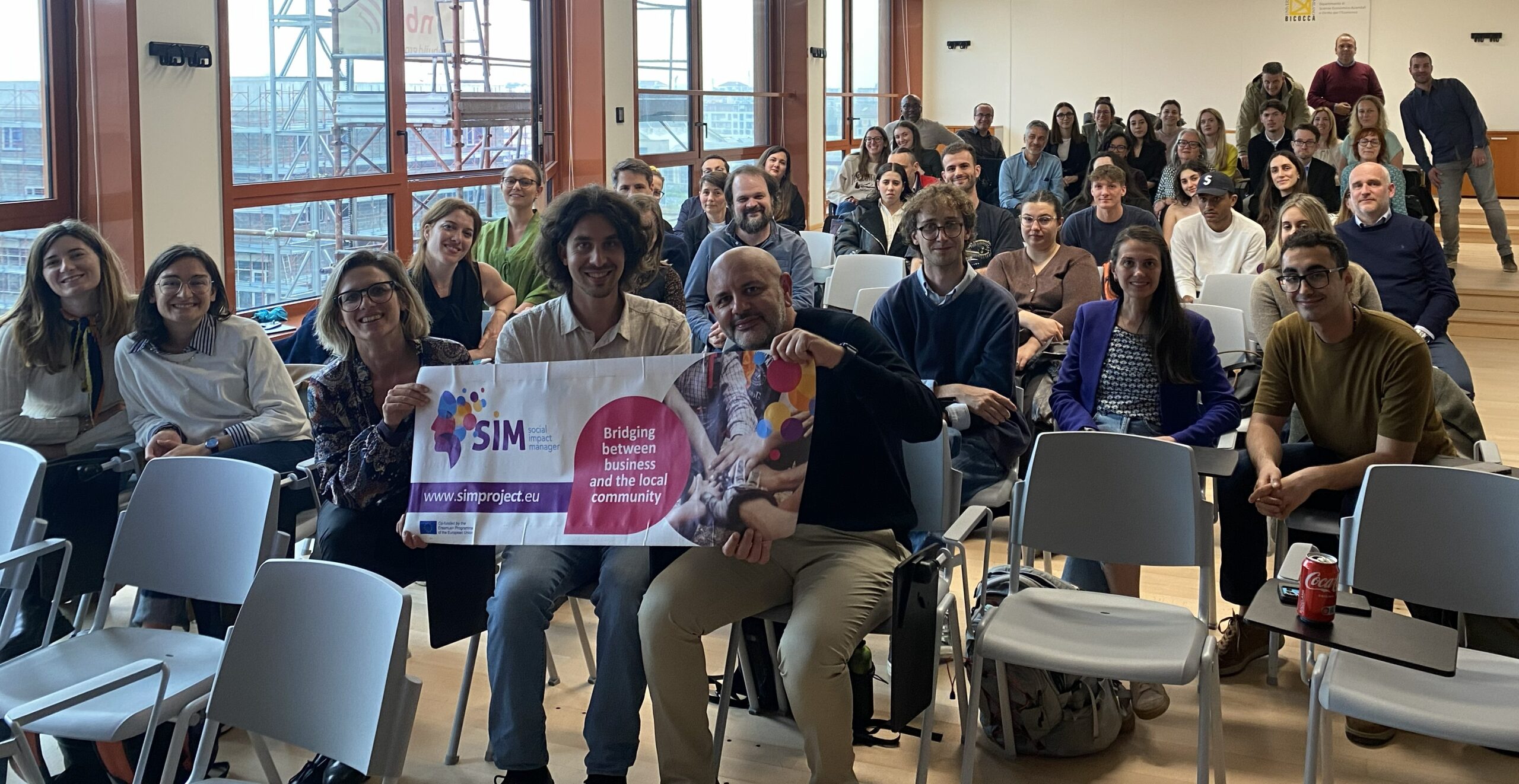
The final conference of the SIM – Social Impact Manager Project, hosted at the University of Milano-Bicocca, marked a meaningful and inspiring conclusion to three years of collaboration, learning, and innovation in the field of social impact management.
Organised through the joint efforts of the University of Milano-Bicocca, Project School, and Manageritalia, the event created a vibrant environment for dialogue, reflection, networking, and future planning. Across two intensive and engaging days, participants explored themes including sustainability, urban transformation, social innovation, circular economy practices, and cross-sector collaboration through workshops, debates, study visits, and networking sessions.
The conference opened with a presentation of the SIM initiative itself, highlighting the project’s different phases, major achievements, and the opportunities that lie ahead. This provided participants with a valuable overview of the programme’s impact and the collective progress achieved over the project’s lifetime.
One of the standout moments from the opening day was the SIM in Action workshop, which moved beyond theoretical discussion and encouraged participants to engage directly with practical approaches to social impact strategies. The interactive format created meaningful exchange, collaboration, and idea-sharing among attendees from diverse sectors and backgrounds.
The day concluded with an engaging debate on Urban Space, Territory, and Housing, bringing together voices from businesses, journalism, Third Sector organisations, and public administration. The discussion offered a multidisciplinary reflection on urban transformation and examined the increasingly important role organisations and enterprises play in generating sustainable social impact within communities.
Discovering Circular Economy in Action
A particularly memorable part of the conference programme was the SIM study visit to Humana People to People’s clothing sorting facility in Milan. The visit offered participants an eye-opening insight into the human effort, expertise, and environmental significance behind clothing reuse systems.
The experience highlighted the growing importance of sustainable textile management in Europe:
- The textile sector ranks as the fourth highest contributor to pressure on raw material use after food, housing, and transport.
- It is also the third-highest sector for impact on water and land use.
Participants had the opportunity to meet the teams responsible for collecting, sorting, and assessing donated clothing every day. From the moment garments enter collection bins to the point where they are individually evaluated and priced, the process is highly detailed, skilled, and impactful.
One particularly striking insight shared during the visit was that it takes approximately six months of training to master the 64 sorting categories used to classify garments correctly.
Beyond the environmental benefits, the visit also demonstrated the broader social impact created through clothing reuse initiatives. Funds generated through the collection, sorting, and resale of used clothing directly support Humana’s social and environmental projects around the world. Around 23% of Humana’s funding comes from clothing collection and resale activities, while the remaining support comes through international and local partnerships.
The study visit served as a powerful example of the circular economy in action, where sustainability, skills development, employment, and community impact intersect in practical and meaningful ways.
Expanding the SIM Community
One of the defining strengths of the final conference was the diversity of participants involved. The event brought together students, NGOs, companies, professionals, educational providers, activists, and Third Sector representatives, creating a truly interdisciplinary environment for discussion and collaboration.
Importantly, the final conference also reflected the evolution and expansion of the SIM project community itself. While earlier project activities had primarily focused on collaboration with companies and business stakeholders, the Milan event broadened participation to include organisations working in areas such as diversity, volunteering, social inclusion, activism, and the circular economy.
This expansion significantly enriched the discussions and reinforced the project’s commitment to building stronger cooperation across sectors.
Looking Back and Looking Ahead
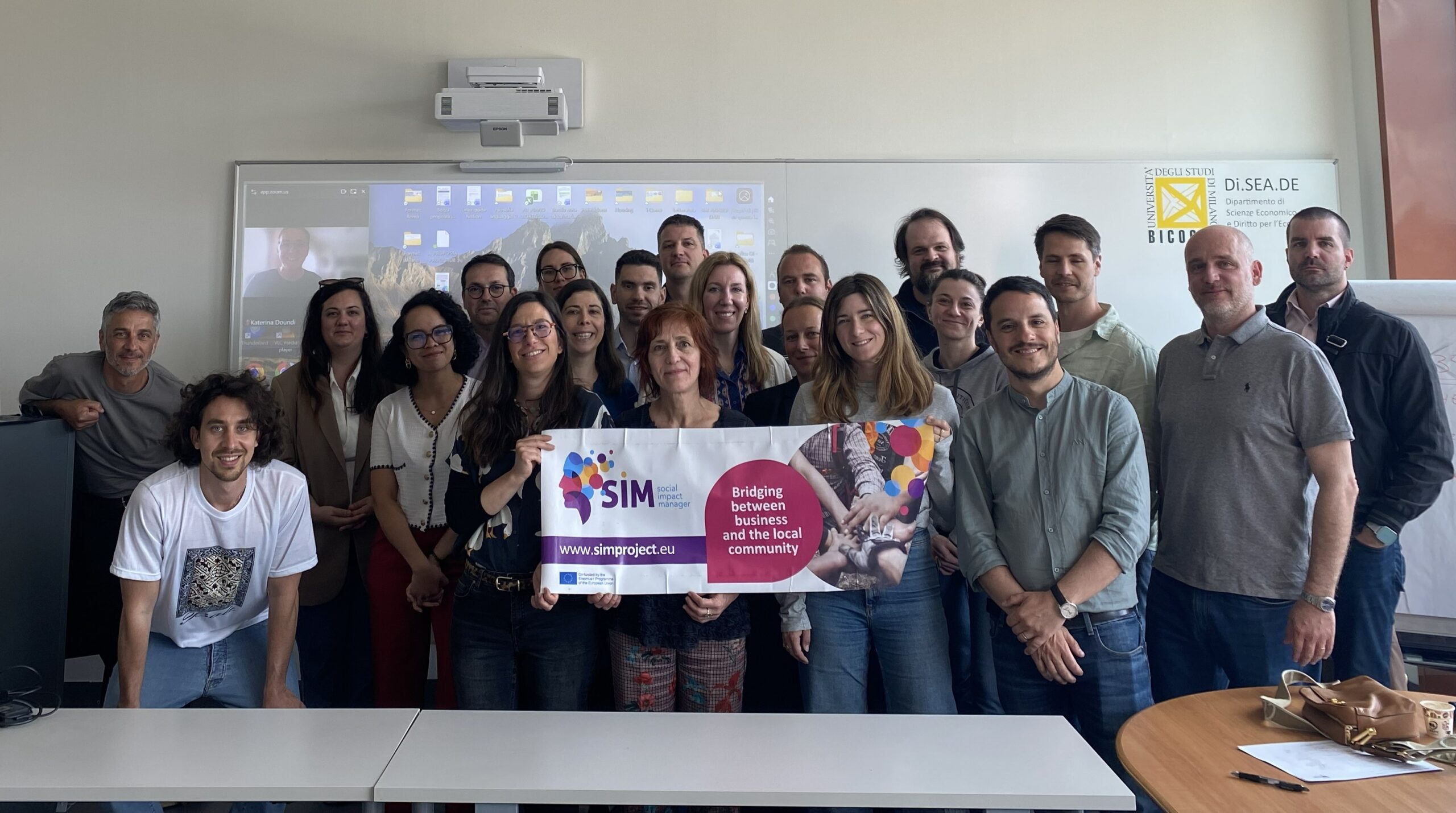
Alongside the public conference activities, project partners also gathered in Milan for the final transnational partner meeting. The meeting was both productive and emotional, offering an opportunity to reflect on the achievements and relationships built over the course of the three-year project.
Together, partners:
- Reflected on the activities, discussions, and key learnings emerging from the final conference
- Reviewed the remaining tasks and next steps for successful project completion
- Celebrated the extensive range of high-quality resources, tools, and outputs developed throughout the project
- Explored future opportunities for collaboration inspired by the strong partnerships formed through SIM
While the SIM project may be reaching its formal conclusion, the relationships, knowledge, and resources developed through the initiative will continue to create value long into the future.
A special thank you goes to Project School, University of Milano-Bicocca, and Manageritalia for their exceptional collaboration, hospitality, and dedication in delivering such an engaging and impactful final conference in Milan.